

In this post, I share helpful information, tips and advice for walking the Camino Portuguese from Porto, along with a 10-day itinerary which includes the Spiritual Variant.
Some of the links in this post are affiliate links. All this means is that if you make a purchase through one of the links I have provided, I will earn a small commission as a result but the cost to you will remain exactly the same.
Walking the Camino Portuguese was never part of my plan at the beginning of this year. I always figured that, after enjoying the solitude of the Camino Primitivo and the Camino Finisterre, I wouldn’t enjoy walking one of the more popular Camino routes.
However, after my big Madagascar trip got cancelled at the back end of 2025, I had some annual leave to use up before my new leave year began in April. And, seeing as though Easter fell in March, I thought I’d take advantage of the two bank holidays in order to have a couple more days to tag on to the end of my remaining leave.
Booking another long-haul trip was not really a consideration so late in the day, so I started looking at some of the European hikes I had on my wish list. This list included quite a few of the Camino de Santiago routes.
The problem was that many of the routes I’d bookmarked involved walking through the mountains, and we all know how changeable weather can be in the mountains, even in the summer months. So, I didn’t want to take the risk of walking a mountain route in March.

The kind of mountains you’ll walk through on the Camino San Salvador.
I also discounted any routes where services would potentially be sparse. March is still considered low season and many albergues, pensions, and hotels don’t open their doors until after Easter, especially on the lesser-walked routes. Likewise, cafes, bars and restaurants won’t open if there isn’t a demand for them.
If I wanted the reassurance of being able to easily find coffee, food and lodgings, I needed to choose a well-trodden hiking route.
And I considered that a well-trodden route in the off-season might actually be a lot quieter, and therefore, much more enjoyable.

Following the course of the river Labruja, Alto Minho.
So, I headed over to Gronze to research the logistics of walking the Camino Portuguese.
Although the full Camino Portuguese route runs from Lisbon to Santiago de Compostela (and takes 25-30 days to walk), most pilgrims start from Porto and complete the trail in 10-15 days.
From Porto, I worked out that, in 10 days, I could walk the Coastal route as far as Vila do Conde (the first stage of the Central route involves some busy road walking through Porto’s urban and suburban areas and is reportedly not very inspiring!), join up with the Central route in São Pedro de Rates, and also incorporate the Spiritual Variant.

Camino Portuguese route map, shared via caminoways.com
Tagging on a day of travel either side made this trip 12 days in total — the exact number of days I had available to me.
If you’re also thinking about walking the Camino Portuguese from Porto, and are considering adding on the Spiritual variant, then hopefully this post will help you to plan your trip.
Walking the Camino Portuguese from Porto | Overview
- Starting point | Sé Cathedral in Porto
- Finishing point | Plaza de Obradoiro in Santiago de Compostela
- Distance from Porto to Santiago de Compostela, following the same route I chose | 290.7 kilometres (180.2 miles)
- Percentage of pilgrims arriving in Santiago de Compostela who have walked the Camino Portuguese | 35.9% (2025)
Walking the Camino Portuguese from Porto | Coastal or Central route?
This was probably the hardest decision I had to make prior to building my itinerary for the 10-day walk. Because, I get severe FOMO when I’m hiking. I research every alternative route prior to arriving at the fork to ensure that I’m not missing out on anything important. And, if there’s a diversion to a historic monument or significant landmark, I’ll generally take it.
So, when faced with a decision about which path to follow, with no easy option to re-route if I changed my mind (aside from at Vila do Conde/São Pedro de Rates and Caminha/Tui), I found it difficult to make a choice. Ultimately, I based my decision on the following factors:
- When the weather is bad, the Coastal Route can be brutal, with heavy winds and little shelter. As I was walking in March, I was expecting the weather to be quite changeable. Whilst coastal scenery is beautiful when the weather is warm and sunny, it can feel pretty bleak by the sea on a cold, cloudy and wet day.
- The cities are bigger along the Coastal Route, whilst the Central Route passes through smaller historic towns and villages.
- The Central Route incorporates a greater number of hills, and therefore, more ascents and descents. This may be a reason for a lot of people to choose the Coastal Route, but I love the changes in elevation when I’m hiking — it makes the walk more interesting for me.
Both the Central and Coastal routes merge in Redondela, and, 25 kilometres further along, just outside Pontevedra, you’ll be presented with the decision to either take the Spiritual Variant or to stay on the main path, continuing on to Padrón via Caldas de Reis.

Following the Spiritual Variant – a lovely and peaceful section of the Camino Portuguese.
If you decide to take the Spiritual Variant (which I wholeheartedly recommend), you’ll then be given another choice on day three of the variant: hop on a boat or cover the distance on foot? You can still obtain your compostela if you choose the boat — more on that later too!
The only fact that was not sitting right with me when I made my decision to take the Central Route was that the Central Route is walked by more pilgrims. According to the Pilgrim’s Reception Office in Santiago de Compostela, 53% of all pilgrims who walked the Camino Portuguese in 2025 walked the Central Route (a total of 100,804). I consoled myself with the fact that it was only a small majority in the grand scheme of things.
What time of year should I consider walking the Camino Portuguese?
I probably wouldn’t have chosen to be walking the Camino Portuguese as early in the year as March, had I not had annual leave to use up. The primary reason being that March is a transitional month in many parts of Europe (mainland Spain and Portugal included), which means that the weather can still be quite changeable and rain is often expected.
As it turned out, I rocked up in Porto in the middle of a heatwave. A heatwave that continued for the duration of my 10-day walk. Now, when I say a ‘heatwave,’ I mean a heatwave for the time of year. Average high temperatures in March are normally 17 degrees (with average lows of 9 degrees); when I was walking the Camino Portuguese, we had highs of at least 10 degrees above that. I remember glancing at my phone one evening and the outside temperature was still showing 24 degrees.
Now, that may be too hot for some people but I ABSOLUTELY LOVED IT! And, I honestly couldn’t believe my luck, because I didn’t have a single spot of rain either.
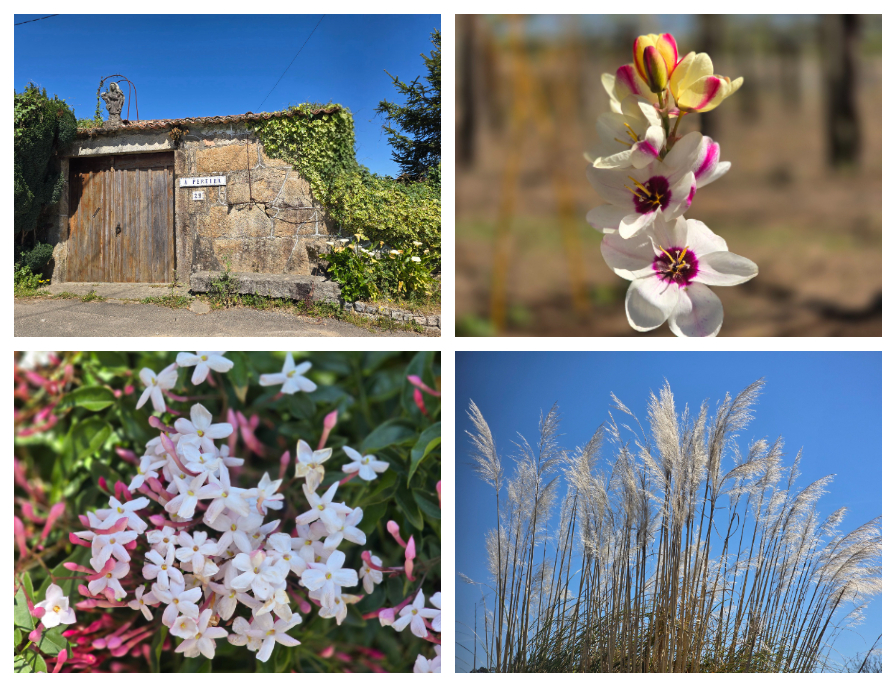
Sunshine and blue skies make everything a lot more vibrant and colourful.
However, on the basis that this was unseasonably warm and dry for the time of year, I wouldn’t recommend walking the Camino Portuguese in March unless you are prepared for rain. it normally rains on an average of 17 days out of 31. And, although prologned periods of heavy rain are rare, this could still put a bit of a dampner (excuse the pun!) on your walk. On the plus side, though, March can be (and was, in my experience) delightfully quiet along the trail, but you do (normally) have to sacrifice reliable weather and warm, sunny days, in order to benefit from this.
According to Stingy Nomads (who have walked the Camino Portuguese several times), the end of April or beginning of October are the best times of year to walk if you want to benefit from a decent mix of good weather and fewer people. However, they also state that June (the start of the summer season) is less busy than May or September.
How difficult is the Camino Portuguese?
This totally depends on your levels of fitness and previous experience with multi-day hiking. Walking 20+ kilometre days for multiple days in a row is a challenge in itself if you’ve never done anything like that before.
However, the Camino Portuguese is usually billed as one of the easier Caminos in terms of elevation gains and losses. The total elevation gain / loss on the Central Route from Porto (which is the hillier of the two routes) is 4045 metres / 3820 metres compared to 8818 metres / 8601 metres on the Camino Primitivo (which was the first Camino I walked).
In terms of daily distances, how far you walk each day is entirely within your control on this route. The Camino Portuguese has an abundance of services available all the way along the trail, so you don’t have to stick to the typical stages, if you decide you don’t want to walk as far or, in my case, if you want to walk a bit further.

Typical scenery along the Camino Portuguese Central Route
The terrain on the Camino Portuguese is a mixture of asphalt, cobblestones, and gravel footpaths. Cobblestones can be slippery in the rain, which does present slightly more of a challenge if you happen to be walking the Camino Portuguese in wet weather, but there are certainly no parts of the trail that I would describe as difficult from a technical point of view.
Walking the Camino Portuguese from Porto | Planning your Stages
I’ll start this by saying that you don’t need to plan your stages on the Camino Portuguese as long as you’re walking at a time when the trail won’t be too busy. There’s plenty of accommodation along the route, so if you’re not sticking to a set budget, you should just be able to rock up in town when you get tired and find somewhere to sleep.
However, if you plan to stay solely in public or private albergues, are travelling on a strict budget, want the certainty of a private room each night, prefer not to stray too far from the trail, or simply want to avoid the stress of wondering where you’ll sleep each evening, then a little more planning is required.
I always prefer to book my accommodation in advance for the following reasons:
- I know the sorts of distances I’m comfortable walking every day.
- I prefer to sleep in a private room if possible (although I do enjoy staying in private albergues, as they’re a great way of making friends)
- I do have an accommodation budget I try to stick to, so knowing how much I’m paying for my bed before I arrive really helps me to stay within budget.
- I’m not an early riser, so I really don’t want to have to force myself to get up ridiculously early, start walking in the dark, and then rush to get to my final destination as quickly as possible, just so as I can secure a bed before someone else does. That’s not my idea of fun.

Woodland walking on the Camino Portuguese.
Considering that the Camino Portuguese is a lot flatter than the Camino Primitivo, and would therefore be an easier Camino to walk, I wanted to increase my daily distances a little to try and make the route a little more challenging for me. Where I walked an average daily distance of 24.9 kilometres on the Camino Primitivo, my aim was to make this nearer 30 on the Camino Portuguese. It actually turned out to be 30.1 (19 miles). So, I planned my stages as follows:
- Day 1 | Porto to Vila do Conde, along the Coastal Route | 36.1 kilometres (this was longer than the anticipated 35.2 due to several diversions as a result of the walkways being damaged in the floods earlier in the year)
- Day 2 | Vila do Conde to Barcelos | 29.46 kilometres (there is a connecting route between Vila do Conde on the Coastal Route and San Pedro de Rates on the Central Route. From San Pedro de Rates, I followed the Central Route to Barcelos)
- Day 3 | Barcelos to Ponte de Lima | 34.56 kilometres
- Day 4 | Ponte de Lima to Tui | 38.21 Kilometres (I double-staged here; the usual stages are Ponte de Lima to Rubiães and Rubiães to Tui)
- Day 5 | Tui to Redondela | 33.44 kilometres
- Day 6 | Redondela to Pontevedra | 20.98 kilometres
- Day 7 | Pontevedra to A Armenteira | 21.04 kilometres (following the Spiritual Variant)
- Day 8 | A Armenteira to Vila Nova de Arousa | 25.09 kilometres (along the Spiritual Variant)
- Day 9 | Vila Nova de Arousa to Padrón | 36.10 kilometres (along the Spiritual Variant)
- Day 10 | Padrón to Santiago de Compostela | 25.55 kilometres
Walking the Camino Portuguese | Resources
The following are resources I use to plan every Camino I walk. Since returning from the Camino Portuguese, I’ve since walked the Camino San Salvador between León and Oviedo, which was my fourth Camino.
- Gronze. As I’ve mentioned earlier on in this post, Gronze is my go-to Camino-planning site. It’s the first place I head when I’m thinking about walking a new Camino.
- Buen Camino app. I use this in conjunction with Gronze, as well as when I’m actually on the Camino. Their maps show all the alternative variants in blue, and you can see where you are on the map in real time. Buen Camino is also great for locating services along the route.
- Footpath app. This is an app I’ve been recommending for years. Although most of the Caminos are well way-marked, I always map my route on Footpath the evening before I walk, so that I’ve got it as a back-up. Once the route is mapped, you can follow it without internet or phone signal. It shows where you are on the map and the elevation along the route, and, if you happen to go off trail, you can easily find a way to re-join it.
- Camino Portuguese guidebook. Although, I didn’t actually take this on the walk with me, I used it extensively during the planning stages. Sometimes it’s easier using a physical book rather than going backwards and forwards between different websites and blog posts on the internet.
Walking the Camino Portuguese | Accommodation
Much like other Camino routes, you’ll generally have the choice of staying in the following types of accommodation when walking the Camino Portuguese:
- Municipal albergues. Theses are like hostels, run by the local municipality, and are for pilgrims only (you have to show your credential when you check in). You cannot book municipal albergues in advance — beds are available on a first-come, first-served basis. Municipal albergues are your cheapest option on any Camino.
- Private albergues. These are privately-run hostels where anyone can stay, and you can quite often book these in advance. They will usually have dorm rooms available as well as a small number of private rooms too.
- Pensions. These are small, often family-run guesthouses with a few private rooms available. Sometimes, you’ll have to share bathrooms; sometimes you won’t.
- Hotels. You’ll generally only find these in the larger towns and cities. Fairly self-explanatory – private rooms with private bathrooms.
I tried to keep my accommodation costs at an average of under £50 (currently €58.32) a night. Obviously, you can keep costs even lower if you stay in shared rooms or if you’re travelling as a couple or a group of friends. My main priority was finding somewhere close to the trail, with cafes/bars/supermarkets nearby.
This is the first Camino I’ve walked where I’ve been able to book all my accommodation on booking.com rather than having to secure a booking with the property via Whatsapp or email. It was a lot easier to keep track of my bookings this way, and I could quickly import all of those reservations into my Tripit app with one simple click.
If you’d prefer to stay in private rooms, here is a list of all the places I stayed along the Camino Portuguese. I would recommend all of them, but I loved some more than others.
- Day 0 | Maria da Sé Historic House, Porto. I couldn’t have asked for a better location; this was literally steps (around a 3-minute walk) from Sé Cathedral (hence the name) — the starting point of the Camino Portuguese. The lady who runs it (Maria) is super friendly and welcoming. She loves to chat to pilgrims who are walking the Camino Portuguese, and also has a stamp for your credential. I had port wine and pastéis de natas left for me in the room when I arrived and then, the following morning, despite not paying for breakfast at the accommodation, Maria invited me to the table and plied me with coffee and more pastéis de natas before I set off.
- Day 1 | Venceslau Boutique, Vila do Conde. A short distance away from the main cluster of cafes and bars in town, but was cheaper as a result. My room was really quiet despite being near a main road, and thoughtful additions like a mini clothes airer and some pegs to dry my clothes helped to put a smile on my face after a long day of walking the Camino Portuguese.
- Day 2 | Casa de Ana Boutique Guest House, Barcelos. This place was beautiful and represented amazing value for money, especially considering that I was given a room upgrade when I arrived, there was a coffee machine in the room, and the nightly rate included breakfast at the restaurant next door. Definitely my favourite of all the places I stayed along the Camino Portuguese.

My room at Casa de Ana, Barcelos
- Day 3 | Terraço da Vila, Ponte de Lima. This place was a little tricky to find, but it’s literally right on the trail and right in the centre of Ponte de Lima. It’s a self check-in, but that worked fine for me. Nothing fancy about the room (apart from the really powerful, hot shower; one of the best out of all the places I stayed in), but it was perfectly clean and comfortable.
- Day 4 | Pension La Corredera, Tui. Located in a beautiful grand old building, just a couple of hundred metres from the trail. There’s a supermarket just around the corner, which is handy when you don’t arrive until gone 8 p.m. and then can’t be bothered to go out to dinner!
- Day 5 | Hostal A Marisma, Redondela. The owner was really welcoming and helpful and spoke excellent English. It’s a short distance away from the trail and the main cluster of cafes and bars in town, but there’s a lovely breakfast place just a couple of doors away, inside the local market. As it’s a hostel, there’s a kitchen on site, a laundry service available, and lots of shared common spaces to sit and relax.
- Day 6 | Pensión A Xanela, Pontevedra. Located in a lovely old building on the edge of one of Pontevedra’s most buzzing squares, but still quiet to sleep at night. Self check-in was also nice and easy. It was one of the most expensive places I stayed along the trail (I definitely went over budget on this one!), but I struggled to find any cheaper options available. I guess that’s one of the perils of walking Easter week, when a lot of the locals are on holiday, too.

My room at Pensión A Xanela, Pontevedra
- Day 7 | Albergue Caroi Hostel and Rooms, A Armenteira. This is a relatively new albergue in town (and popular too; the guys I was walking with were turned away because they were fully booked). Everything here is fresh, bright, modern and clean and it’s literally right on the trail. There are plenty of relaxation / chill-out areas available, including a south-facing garden, if you get lucky with the weather. The lady at reception is super friendly and welcoming and speaks excellent English.
- Day 8 | Hotel Bradomin, Vila Nova de Arousa. This place was a bit soulless (everything is white!), but perfectly comfortable and clean. It’s a short walk from the trail and around a 10-minute walk to the harbour. The staff at reception were friendly enough and they serve pilgrim meals in the attached restaurant.
- Day 9 | Apartmentos and Rooms Santiaguiño, Padrón. Perfect location right on the trail and next door to the church (where you can grab a stamp for your credential). The room itself is spacious, comfortable and clean, and there are coffee and tea making facilities available. Access was via a code sent to me on the booking.com app. I’d stay here again but NOT on Easter Saturday — there was a stage set up nearby that was blasting music until around 4 a.m! Even with decent ear plugs in, I got very little sleep that night.
- Day 10 | Hospedaje Ramos, Santiago de Compostela. This is officially my new favourite place to stay in Santiago de Compostela! I only booked a room here because the two places I normally stay at were fully booked, but this hospedaje was cheaper and is actually nicer, too. My room had a fantastic view over the city and I could even see the cathedral — which, incidentally, is only a 3-minute walk away. The host was lovely, spoke excellent English, and allowed me to store my backpack there once I’d checked out.

My room at Hospedaje Ramos and the view from my window.
Walking the Camino Portuguese | What to Pack
I’m not going to go through my entire Camino packing list here, because I have a full post scheduled very soon. But, at the very least, make sure you bring the following items:
- A worn in pair of walking shoes. I favour non-waterproof trail running shoes, because they’re lightweight and dry quickly.
- A comfortable backpack. Along with the right pair of shoes, this is the most important item of kit on your Camino packing list. A poorly-fitting pack can turn an enjoyable walk into a test of endurance.
- A waterproof jacket or poncho. Because, even in summer, it can (and probably will) rain on your Camino.
- A good pair of ear plugs. Even if you’re staying in private rooms, you will at some stage be subjected to the sounds of church bells, cockerels, dogs, or loud music. Or, all of the above.
Walking the Camino Portuguese | Getting to Porto and home from Santiago de Compostela
Porto has its own airport that’s under 20 miles (around a 35-minute metro journey) from the centre of the city. If you’re UK-based, you’ll be pleased to know that budget airlines like Ryanair, Easyjet and Jet2, run regular flights there from a number of different UK airports. I flew from my local airport in Birmingham with Jet2 for around £60.
From the airport, you can reach the centre of the city using Porto’s reliable metro network. Take line E (destination Estádio do Dragão) to Trindade, just outside the historic centre of the city. If you’re staying in the historic centre (as I was), you can change on to line D (destination Vila d’Este) and get off at São Bento. Most accommodation in the historic centre is walkable from there.
From Santiago de Compostela, it’s a little more difficult to get home — if you’re travelling back to the UK, at least. Whilst Santiago’s airport is super close to the centre of the city (you can catch bus number 6A from here), you can only fly into London airports (Stansted with Ryanair or Heathrow with Vueling). As I live in Shrewsbury, the cheapest and easiest option for me was to catch a Flixbus from Heathrow’s bus station to Great Charles Street in Birmingham, make the 10-minute walk to New Street Station and then catch a direct train home from there.
Picking up your credential and collecting stamps
Picking up your credential in Porto is easy — just head to Sé Cathedral. It’s open from 09:00-18:30 hours every day.
In order to get your Compostela from the cathedral in Santiago at the end of your Camino, you must collect at least two stamps per day during the final 100 kilometres (so, from Tui onwards) of your walk. Stamps can be found inside churches (so, if you pass one, check whether it’s open), and at albergues and cafes. It’s always worth asking staff “tiene un sello?” if you visit a cafe along the route, as they don’t always keep them out on display.

My compostela certificate and my credential, complete with stamps
If you follow the Spiritual Variant, the boat trip from Vila Nova de Arousa (if you choose to take it) to Padrón does count towards that qualifying 100-kilometre distance. The reason behind this is that the boat journey replicates the one taken by the disciples of St. james (the Patron Saint of Spain), to transfer his body from Vila Nova de Arousa to the cathedral in Santiago de Compostela. You’ll be able to get a stamp on the boat and then a second one when you arrive in Padrón.
Walking the Camino Portuguese from Porto | Route stages
Day 1 | Porto to Vila do Conde (35.2 kilometres / 21.9 miles)
⇒ Actual distance walked: 36.1 km (22.4 miles) | Time taken to complete: 6 hours 53 minutes | Elevation gain: 215 metres
I’ll start by saying that, if you have time in your schedule, I’d recommend giving yourself a day to explore Porto before starting your walk. I’d spent a long weekend in the city previously, so I didn’t factor any time in on this occasion. But, when I arrived just as the sun was setting over the Douro River, I remember wishing that I had.

The sun setting over the Douro River in Porto.
As I mentioned earlier on in this post, I chose to follow the Coastal Route for the first stage of my journey, and then swap over on to the Central Route on the second day. The primary reason was to avoid what was reportedly some very uninspiring initial kilometres through Porto’s Metropolitan Area, which:
consists of 17 municialities and a series of ring roads, residential neighbourhoods, commercial areas and industrial zones.
(Buen Camino app)
The alternative was to walk next to the ocean for the entire day. For me, it was a no-brainer.
Unfortunately, I’d arrived in the city the evening beforehand after the cathedral had closed its doors, so I set off a little later than planned this morning due to having to wait for the cathedral to re-open in order to pick up my credential.
I lingered a while in Terreiro da Sé (the main square in front of the cathedral), watching the pilgrim comings and goings and snapping a few photos before starting my watch and setting off (once I’d figured out which direction I was supposed to be setting off in!).

Scenes from the start of the Camino Portuguese in Porto.
A lot of today’s walking was through built-up areas interspersed with pretty parks, but when the views directly to the west of you are of the sea, it immediately makes everything better — especially when the skies are as blue as they were today.
Today’s section is super flat (I think the elevation gain is all at the very beginning and very end), and either involves walking along pavements or boardwalks — and, sometimes, sand!

Scenes along the Douro River as I was leaving Porto.
Highlights
Foz do Douro. Here you’ll find a couple of lighthouses (Barra do Douro and Felgueiras), a lovely little park and the São João Baptista Fortress. The fortress was built at the end of the 16th century to protect the coast and the mouth of the Douro River. It is possible to go inside, if you happen to be walking this section on a weekday, however, I didn’t due to having a long day of walking ahead and not really being able to spare the time.

Scenes from Foz do Douro, Camino Portuguese Coastal Route
Fort of São Francisco Xavier. A little further along the coast, you’ll find another fortress. The Fort of São Francisco Xavier is more commonly known as Castelo do Queijo (‘Cheese Castle’), because it was, apparently, built on a rock shaped like a cheese! It was likely constructed in the 15th century and offers uninterrupted views out to sea. The admission fee is only €0.50, so it’s worth having a quick nosey around if you have time.

Fort of São Francisco Xavier, Camino Portuguese Coastal Route
Farol de Leça and the Capela da Boa Nova. Just after you pass Matosinhos, you’ll find another lighthouse (there is no shortage of them on today’s section) and a small Franciscan chapel dating from the 13th century. Away from the crowds of Matosinhos, this is a lovely, peaceful section of the coast path, and the chapel makes for a perfect half-way lunch spot.

Farol de Leça and the Capela da Boa Nova, Camino Portuguese Coastal Route.
Calla lilies growing everywhere. I didn’t actually know the name of these lilies until I looked them up, and I’ve never seen so many growing in one place before — they were literally everywhere along the trail during the second section of today’s stage. I did spot them regularly along the whole of the Camino Portuguese, but nowhere was their presence quite as concentrated as it was today. Apparently, they’re native to Southern Africa (although they do grow naturally in Southern Europe and parts of North America) and thrive in wetlands, along riverbanks, and in shallow water or muddy areas.

Calla lilies were growing everywhere along the Camino Portuguese
Arriving into Vila do Conde. After almost seven hours on my feet, I finally arrived into Vila do Conde just before 6 p.m. I was actually gutted I didn’t have longer to explore the town, and especially to have a look around the impressive Convento de Santa Clara.

Convento de Santa Clara, Vila do Conde
But, I managed to have a brief wander around in some rather nice late afternoon/early evening sunshine before checking into my accommodation, grabbing a quick shower, washing my socks, and enjoying a giant cheeseboard for dinner at Reliquia.

Scenes from Vila do Conde, Camino Portuguese Coastal Route
Day 2 | Vila do Conde to Barcelos (29.5 kilometres / 18.3 miles)
⇒ Actual distance walked: 29.5 km (18.3 miles) | Time taken to complete: 6 hours 5 minutes | Elevation gain: 396 metres
Seeing as though a large chunk of today’s walk (Vila do Conde to São Pedro de Rates) is not officially part of the Camino Portuguese (it is purely a connecting path between the Coastal and Central Routes), I had no stats to refer to regarding the distance. I did map it on my Footpath app so I knew approximately how far I’d be walking beforehand, but this is why my ‘actual walked distance’ is the same as the distance recorded above it.
I found this connecting path to be pretty well marked on the whole, and although there were a few sections where I had to walk along a busy main road, overall it was a lot more pleasant than I expected it to be.
Highlights
Finding the most amazing place for breakfast in Vila do Conde. If you’re a fan of everything coffee, arts and crafts, you’ll want to check out Humble Anchor Coffee Roasters on Rua do Lidador. They do an amazing set breakfast menu for €12, which includes pancakes, scrambled eggs, granola/cereal, assorted bakery products, fresh fruit, charcuterie, and yoghurt parfait, as well as coffee, orange juice and apple juice. And, yes, you can order all of those things if you so desire. I did (apart from the charcuterie, as I don’t eat meat), thinking it would be good fuel for my walk, but I left feeling fit to burst rather than fit for anything else!
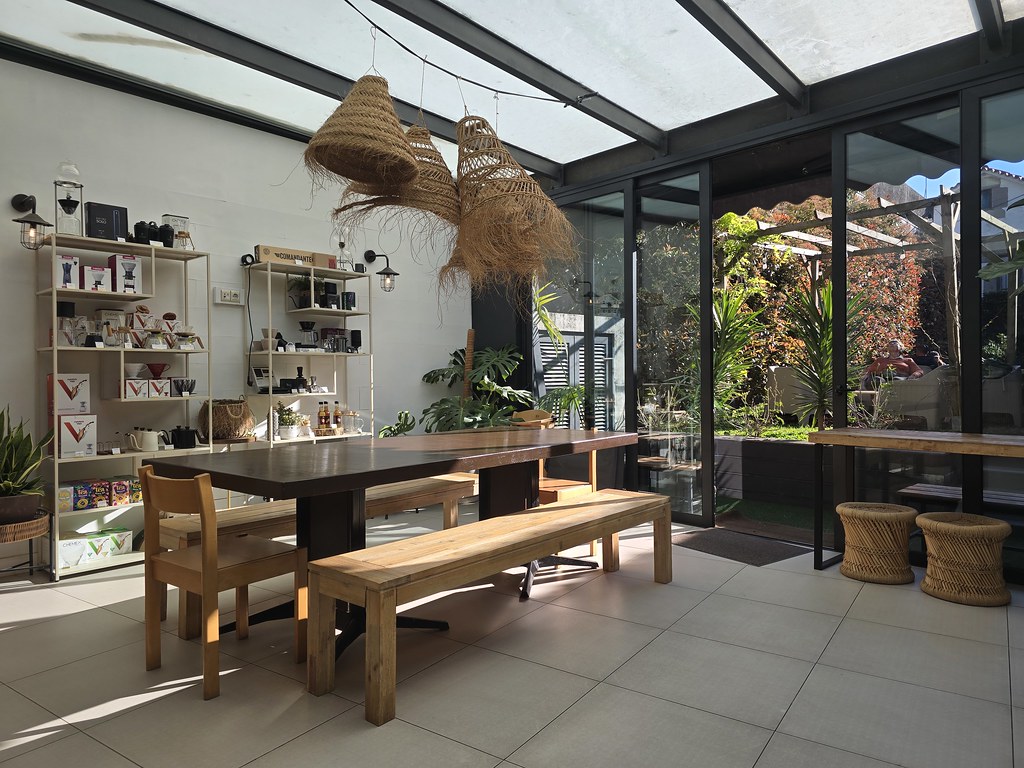
Humble Anchor Coffee Roasters, Vila do Conde
Passing lots of pretty churches along the way. First up, there was the Nossa Senhora da Graça Chapel, one part of the Junqueira Monastery.
And then, in Junqueira itself, there was the beautiful Igreja Paroquial da Junqueira and the attached Mosteiro de S.Simão da Junqueira.

Igreja Paroquial da Junqueira, a beautiful church on the connecting route between Vila do Conde and Sao Pedro de Rates.
Just before you arrive into São Pedro de Rates, in a little village called Arcos (where the path first officially joins up with the Central Route), you’ll find the Paróquia S.Miguel de Arcos. The blue and white azulejos (decorative ceramic tiles) on the front of this church are incredible!

Paróquia S.Miguel de Arcos, just before you arrive into Sao Pedro de Rates.
And then, lastly, on the approach to Barcelos, you’ll pass the Capela de Nossa Senhora da Guia. My feet were really starting to hurt by this point (I don’t think walking over 35 kilometres on my first day had helped matters!), so I stopped to rest here for a while.

Taking a well-needed rest at Capela de Nossa Senhora da Guia, Camino Portuguese
Arriving into beautiful Barcelos early enough to have a decent look around. Barcelos was one of my favourite towns along the Camino Portuguese, and the fact that I was staying at an incredible place definitely enhanced the whole experience!
Barcelos is famous for its pottery and handicrafts, and is also the birthplace of the Rooster of Barcelos — a symbol of Portuguese culture. If you have time while you’re here, make sure you head to the Museu Arqueológico de Barcelos to explore the ruins of a 15th century palace, admire the stunning Barcelos City Hall, enjoy a peaceful walk along the Cávado River, take a look around the Museum of Pottery, check out the Torre Medieval de Barcelos, and have a peek inside a couple of churches (namely, the Igreja do Senhor Bom Jesus da Cruz de Barcelos and the Igreja Matriz de Santa Maria Maior de Barcelos)

Museu Arqueológico de Barcelos

Scenes from beautiful Barcelos, Portugal
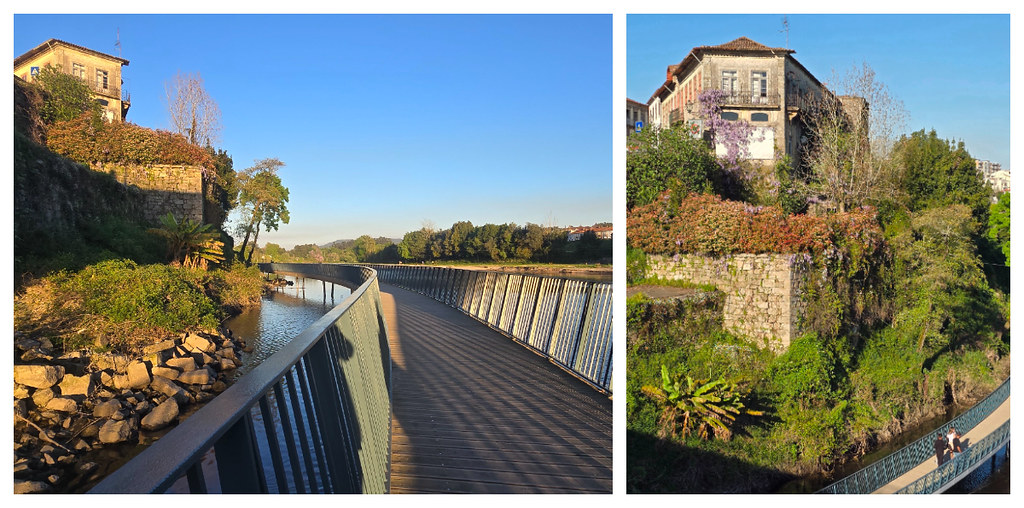
River walks in Barcelos, Camino Portuguese
Day 3 | Barcelos to Ponte de Lima (34.5 kilometres / 21.4 miles)
⇒ Actual distance walked: 34.6 km (21.5 miles) | Time taken to complete: 7 hours 28 minutes | Elevation gain: 507 metres
Today I walked through wine country, although, contrary to seeing loads of grapes on the vines on the other two Caminos I walked in August/September, on this one there were just vines! (and even they were only just starting to grow).
The terrain got a liitle hillier today, with a couple of steep (ish) climbs — the most significant one being a 130-metre gain in 2.3 kilometres in order to reach Portela de Tamel.
Highlights
The scenery. I honestly couldn’t pinpoint anything more specific for the first of today’s highlights, because the scenery all the way along the section of the Camino Portuguese between Barcelos and Ponte de Lima is beautiful!

Wine country, Camino Portuguese Central Route
I walked along meandering woodland trails and quiet country lanes, through tiny rural settlements and past humble isolated chapels. And, honestly, with barely a soul around to shatter the peace and tranquility, it was absolutely perfect.
The church of São Martinho. The original Camino Portuguese trail didn’t go past this 11th century Romanesque church and simply continued along the Rua da Peneda just after you pass through Fonte de Cal. The trail signage still gives you both options, but make sure you choose the one that takes you uphill and away from the main road. It’s a little longer, but definitely a worthwhile alternative.

The church of São Martinho, Camino Portuguese
Arriving into Ponte de Lima. One of the reasons I chose to walk the Central Route was because of the beautiful historic towns that can be found along it, and Ponte de Lima is another of these historic towns. In fact, it’s actually the oldest charted town in Portugal, having been granted its town charter by Queen Teresa back in 1125. Ponte de Lima is located on the Lima River and is named after the Roman bridge that crosses this river.

The Roman Bridge across the River Lima, Ponte de Lima
I didn’t arrive into Ponte de Lima until nearly 6 p.m., but due to the clocks going forward the night before, at least I had an extra hour of daylight with which to explore the town.
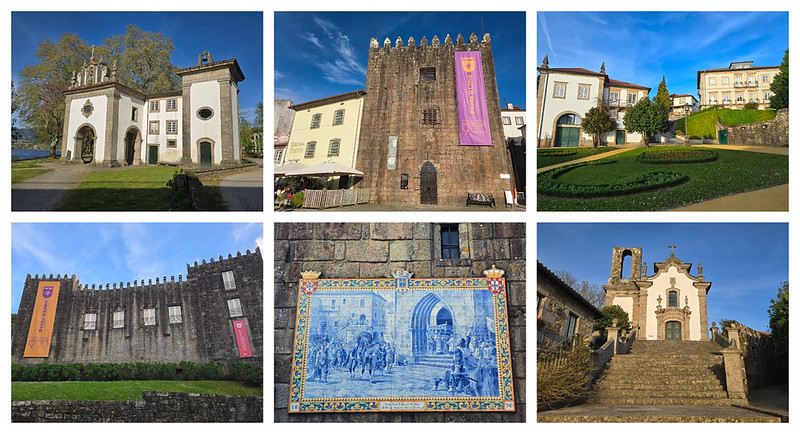
Ponte de Lima, one of the most beautiful towns along the Camino Portuguese Central Route.

Bronze statues, Ponte de Lima
Day 4 | Ponte de Lima to Tui (36.5 kilometres / 22.7 miles)
⇒ Actual distance walked: 38.2 km (23.8 miles) | Time taken to complete: 8 hours 26 minutes | Elevation gain: 781 metres
Whose decision was it to double-stage today? And who didn’t check the elevation before making that decision? Oh, that’ll be me!
However, on the plus side, today’s double-stage was beautiful, particularly the first half — probably my favourite so far.
I loved the constant changes in elevation, the vines growing everywhere, and the frequent sounds of running water all around me. And, like the previous three days on the trail, whilst I met and chatted to a few other pilgrims along the way, mostly I was on my own, enjoying the peace and tranqulity of the landscapes.
Today’s stage includes the ascent to the Portela Grande mountain pass, the highest point along the Camino Portuguese Central Route, and a lovely descent through forests around the village of Aqualonga.
Highlights
Meeting Manuel at Restauro à Sexta. Shortly after crossing Ponte de Lima’s Roman bridge and taking a right turn, you can’t miss Manuel’s place. He’s an artist, woodcarver, and furniture restorer who makes Camino shells and sticks, amongst other things. He greets every pilgrim with enthusiasm and a big smile, ringing a bell for each traveller as a blessing for their journey. He’s also been recording pilgrim numbers since August 2021! According to his plaque, I was the 35,276th pilgrim to pass by since that date.

Meeting Manual at Restauro à Sexta, Ponte de Lima
The scenery. After yesterday’s section, I didn’t think the scenery along the Camino Portuguese could get any more beautiful, but, today, it absolutely did.
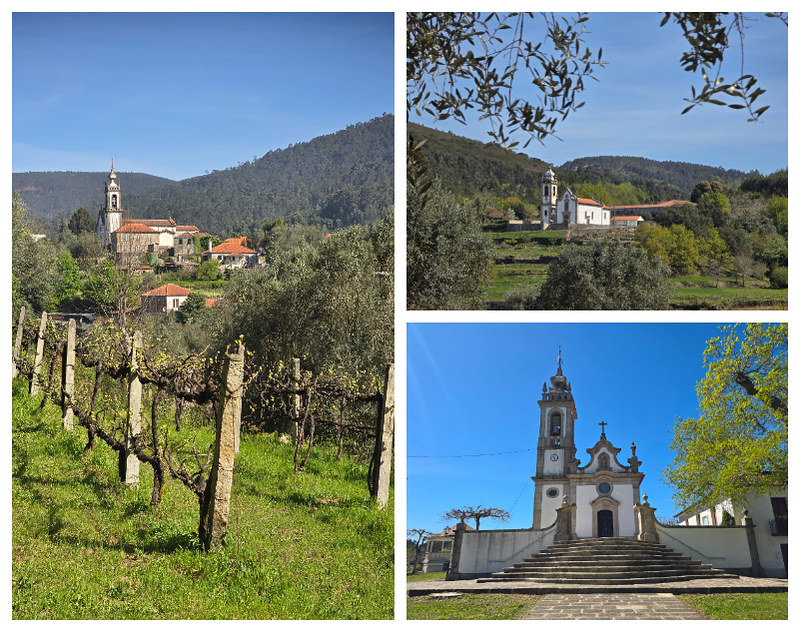
The most beautiful day on the Camino Portuguese.

Forest and woodland trails between Ponte de Lima and Tui on the Camino Portuguese.
If I could only walk one day on the Camino Portuguese again, this one would win hands down. The sunshine and beautiful blue skies obviously helped a lot, too.
Arriving at the highest point along the trail. The ascent to the Portela Grande mountain pass was probably the most difficult climb of the whole Camino and definitely got my heart pounding and my calves burning. But, that made the arrival at the top of the pass all the more rewarding.

The ascent and arrival at the top of the Portela Grande mountain pass – the highest point on the Camino Portuguese.
Accidentally following the alternative (slightly longer) route through Valença’s historical centre. At the Roundabout of Trapicheira (just outside Valença/Tui), signposts encourage pilgrims to continue along Avenida Espanha until reaching the international bridge over the river Minho, and, not realising that following these signposts would mean I would miss out on passing through Valença and seeing its impressive military fort, my intention was to follow them.
However, as a result of quite a confusing staggered junction and the fact that the Roundabout of Trapicheira has multiple exits, I ended up taking the ‘wrong’ road.
But, this turned out to be a very fortuitous mistake, because Valença’s old town, albeit small, is incredibly picturesque, and its fortress is stunning!
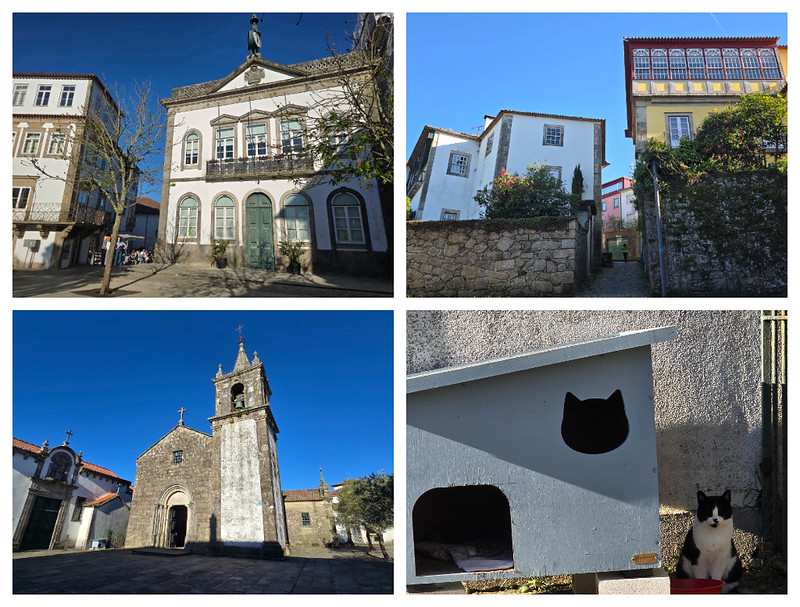
Valença’s old town, Camino Portuguese

Valenca’s fortress, Camino Portuguese.
Crossing the international bridge and being treated to my first views of Tui. This bridge is significant because the river it crosses (the River Minho) separates Portugal from Spain, so you can stand in the middle of it with one foot in each country.

Crossing from Portugal into Spain.

Crossing the Ponte Rodo-Ferroviária de Valença (International Bridge)
As today was my longest day on the trail (38.2 kilometres), it was already pretty late in the day by the time I crossed this bridge, but what I hadn’t realised is that Spain is actually an hour ahead of Portugal during British Summer Time. So, I set foot on the bridge around 7 p.m. and walked off the other side at just after 8 p.m.
By the time I’d walked hobbled into Tui and found my accommodation, it was around 12 hours after I left Ponte de Lima earlier that day, and I really didn’t have the energy to go out to eat. So, I popped to the Frioz supermarket around the corner and had a picnic dinner, because, sometimes, that’s how us pilgrims roll😉.

First glimpses of Tui, Camino Portuguese.
Day 5 | Tui to Redondela (31.9 kilometres / 19.8 miles)
⇒ Actual distance walked: 33.4 km (20.8 miles) | Time taken to complete: 7 hours 7 minutes | Elevation gain: 479 metres
Wow, today was a hot one!
Apart from a few initial stages through woodland, there was a lot of road walking today, and very little shade. Bus shelters were my friends, as they seemed to be the only places available where I could get a little respite from the sun.
There were a few more hikers around on today’s stage (as lots of people just walk the last 100 kilometres to Santiago in order to get their compostela), but numbers thinned out quite substantially as the day progressed.
Highlights
Finding some bagpipe players in the woods. Considering that, at this stage, I was still five days away from the end of walking the Camino Portuguese, I hadn’t expected to pass any musicians playing the bagpipes until much later on. But, I now find the bagpipes quite a welcome sound, because ever since I finished my first Camino, hearing them always reminds me of arriving into Santiago de Compostela.

Bagpipe players in the woods just outside Tui.
The pretty little village of Mos. Many pilgrims choose to break up today’s stage by spending the night in Mos, and I understand why (apart from the fact that you don’t then have to walk a 30+ kilometre day) — it’s a cute little place with an attractive church, a cultural centre, an albergue and a small number of cafe-bars and restaurants.

The pretty little village of Mos.
Meeting a goat. I love goats. They may be a tad smelly, but they’re quirky characters and have amazing eyes. This one let me stroke him (without attempting to eat my clothes in the process) and posed for a photograph.

“Have you got my good side?”
The views from the top of the descent to Padrón. Marked on Google Maps as just ‘Ten out of ten bench,’ this is one of the best views you’ll be treated to on this section of the Camino Portuguese. I’m guessing there was a bench at this viewpoint once upon a time, but nowadays you’ll just have to perch on the grass.

Views from the ‘Ten out of ten bench’ viewpoint.
Day 6 | Redondela to Pontevedra (19.8 kilometres / 12.3 miles)
⇒ Actual distance walked: 21 km (13 miles) | Time taken to complete: 4 hours 31 minutes | Elevation gain: 447 metres
After five days of walking 30+ kilometre days, I cannot tell you how relieved I was to see an official stage distance of under 20 kilometres today. Yes, it ended up being a bit more than this, but isn’t it always!
Redondela is the point at which the Coastal and Central routes merge, so I saw a lot more hikers on the trail today. In fact, I don’t remember there being any point when I couldn’t see at least one in front of me.
Today’s walk took me up into the Sotouxusto forests and on to Arcade (pronounced ‘ar-ca-day’) — a small town known for its oysters and Abariño wine. I then picked up the Brea Vella da Canicouva (a one-kilometre-long path of giant stone slabs that runs along the route of an old 19th century Roman Road) into the Figuerido Mountains, and finished up taking the alternative route into Pontevedra alongside the river Tomeza.
Highlights
Getting a fancy wax stamp for my credential. Helpfully marked on Google maps as ‘wax stamps,’ you’ll find this gentleman just off the main path as you leave the outskirts of Redondela and enter the forests of Sotouxusto. He just asks for a small donation in return, which I was more than happy to give.

Getting a fancy was stamp for my credential.
Sampaio Bridge. Crossing the Verdugo River and separating Arcade from the parish of Ponte Sampaio is this impressive 144-metre-long stone bridge. Whilst its foundations date back to Roman times, it was rebuilt extensively during the 16th and 18th centuries. For all you history buffs out there, this bridge was also the location of the Battle of Puente Sampayo in June 1809. A Spanish victory resulted in the final evacuation of French troops from Galicia.

Puente Sampaio Bridge in Arcade.
Having the whole afternoon to explore Pontevedra. I’d recently watched Days We Spend’s vlog about Pontevedra, so, seeing as though I had a pretty short day of walking today, I was excited about the prospect of having more than just a fleeting couple of hours to explore one of the Camino Portuguese’s loveliest towns.

Scenes from Pontevedra, Camino Portuguese

Churches, Convents and Museums of Pontevedra
I spent my afternoon having a brief wander around the Ruinas de San Domingos (a 13th-century Dominican convent), exploring the huge array of exhibits on display at the Museo de Pontevedra, and having a peek inside the Santa Maria La Mayor Church, Sanctuario de la Peregrina, and Convento de San Francisco. I finished the day with dinner at Casa Verdun, which I can 100% recommend for the food, atmosphere and helpful, accommodating staff.

Dinner at Casa Verdun, Pontevedra
And while we’re on the subject of food, I would also recommend delaying your departure time from Pontevedra the next morning in order to enjoy breakfast at Misto Café Bar.
Day 7 | Pontevedra to A Armenteira (20.5 kilometres / 12.7 miles)
⇒ Actual distance walked: 21 km (13 miles) | Time taken to complete: 4 hours 22 minutes | Elevation gain: 591 metres
There were so many people at the start of today’s hike — it was like being back on the Frances! (I haven’t walked the Frances but the Camino Primitivo joins up with the Frances in Melide). Fortunately, though, as soon as I reached the turn off for the Spiritual Variant, most of them disappeared, and the rest of today’s walk was lovely and peaceful.
After leaving Combarro, the path steadily climbs, in varying degrees of steepness, for the next seven or eight kilometres until the descent into A Armenteira. This could potentially have been a bit relentless (even though it was through beautiful forest), but a few British guys (Dan, Henry and Joe) caught up with me while I was photographing wild horses, and I walked with them for the rest of the way.

Wild horses along the Camino Portuguese Spiritual Variant between Combarro and A Armenteira.
Highlights
Monastery of San Xoán de Poio. I absolutely adored this place and couldn’t believe it when I saw a couple of pilgrims just strolling on past! Don’t do the same — this monastery is definitely worthy of a stop, if only to admire the incredible mosaic inside.
Designed by Czech artist, Antoine Machourek, it depicts the Camino Frances (The French Way), and took the School of Mosaics at this monastery three years to create, using around a million individual tiles (pieces of marble).

The incredible mosaic inside the Monastery of San Xoán de Poio, Camino Portuguese Spiritual Variant.
I also loved wandering around the cloisters and having a nosey at the pieces of artwork on display.

Monastery of San Xoán de Poio and its cloisters

Artwork on display inside the Monastery of San Xoán de Poio.
Admission is just €2.50 (correct April 2026), and yes, they do have a stamp.
The pretty fishing village of Combarro. Located in the Rías Baixas (‘Lower Estuaries’) of Spain’s Galician coast, Combarro is widely recognised as one of the prettiest villages in Galicia. Its old town has been declared a Property of Cultural Interest, and features narrow historic streets lined with stone Galician houses, tiny gardens, stone crosses, and granaries (known as ‘hórreos’).

The pretty little fishing village of Combarro, Camino Portuguese Spiritual Variant.
Relaxing in A Armenteira. A Armenteira is a beautiful little village that’s famous for its 12th century Cistercian monastery. The Monastery of Santa María da Armenteira is situated on the slopes of Mount Castrove, surrounded by lush vegetation and natural springs.
The monastery offers accommodation for pilgrims walking the Camino Portuguese (you can book via their website), however, they’re closed during the Easter holidays. There’s also a pilgrim’s blessing service every evening at 7 p.m.

The monastery at A Armenteira, Camino Portuguese Spiritual Variant
Aside from visiting the monastery, there’s not a lot else to do here, but it’s a lovely, peaceful place to relax for a few hours. I headed to the restaurant recommended to me by my host at Caroi Hostel for a very early dinner (it closes at 5 p.m.) and then spent the rest of the evening soaking up the sunshine in my hostel garden, reading my book. It’s a hard life!
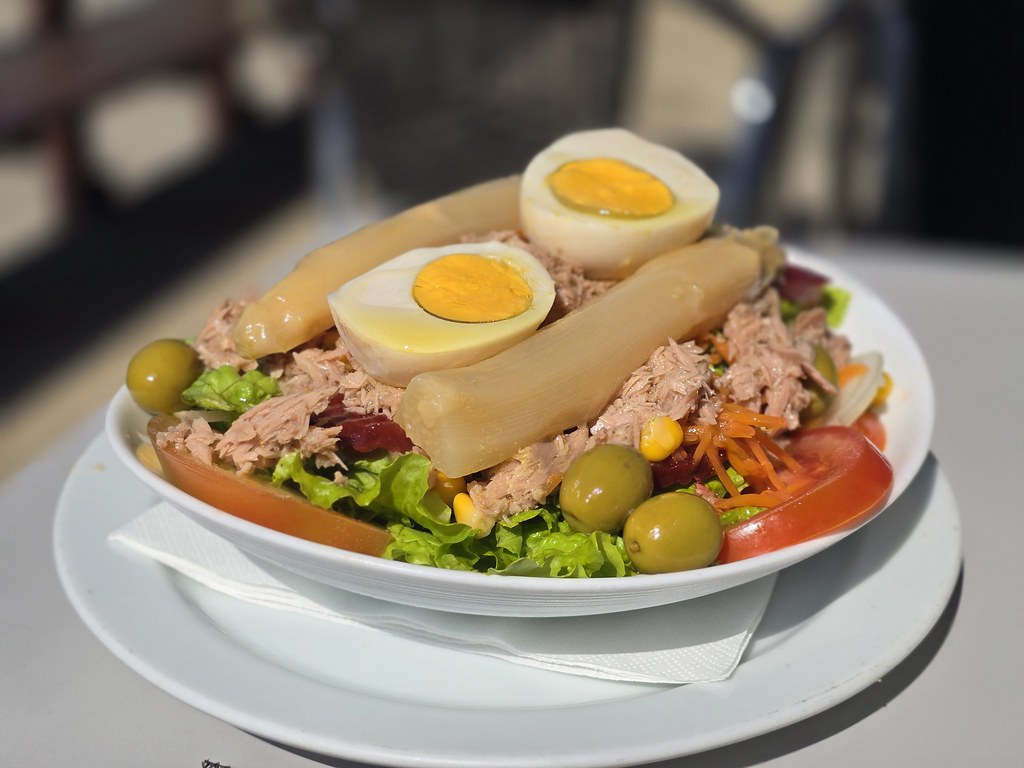
One of the best ensaladas completas I ate along the whole of the Camino Portuguese.
Day 8 | A Armenteira to Vilanova de Arousa (23.4 kilometres / 14.5 miles)
⇒ Actual distance walked: 25.1 km (15.6 miles) | Time taken to complete: 5 hours 13 minutes | Elevation gain: 171 metres
Today’s stage began along one of Galicia’s most beautiful riverside paths, dotted with mills, and also plenty of tree roots to trip over when you’re not paying attention.
It’s also quite easy to get lost along the latter part of this section due to a combination of a lack of markers, the fact that numerous other hiking paths criss-cross the trail and the fact that my blue dot was on delay mode! Fortunately, three separate helpful Spaniards came to my rescue, and the remainder of my journey along the banks of the Río Umia passed without incident.
Highlights
Walking along La Ruta da Pedra e da Auga (‘The Route of Stone and Water’). I honestly felt like I was wandering through a scene from a fairytale this morning. The ‘Route of Stone and Water’ follows the Armenteira River through a landscape of ancient mills, stone bridges and gnarly tree roots. Lush green ferns line the trail, water flows gently over moss-covered rocks, and dappled early morning sunlight filters through the canopy of leaves above you as you walk.

The route of stone and water, Camino Portuguese Spiritual Variant.
It’s almost as if there are creatures watching your every move, their faces etched into the stumps of fallen trees😉.

The route of stone and water, Camino Portuguese Spiritual Variant
Stopping for a delicious breakfast at a cafe overlooking the Río Umia. Although I’d stopped for a coffee and a croissant at the bar in A Armenteira before I left, it clearly wasn’t enough to keep the hunger pangs at bay for very long, so I was incredibly grateful to discover Náutico cafe sitting directly on the banks of the Río Umia. I was even more overjoyed when I discovered that my favourite breakfast of avocado and scrambled eggs on toast was on the menu.

The beautiful Río Umia and a very welcome breakfast stop.
Finishing my day by the sea. Although I didn’t find the town itself particularly attractive, Vilanova de Arousa’s location, on the pretty Ría de Arousa estuary, more than makes up for that. Numerous restaurants and bars wrap around the water’s edge, making it the perfect place to relax at the end of a long day of walking the Camino Portuguese.

Finishing my day by the sea at Vilanova de Arousa.

Vilanova de Arousa, Camino Portuguese Spiritual Variant
Day 9 | Vilanova de Arousa to Padrón (35 kilometres / 21.7 miles)
⇒ Actual distance walked: 36.1 km (22.4 miles) | Time taken to complete: 6 hours 58 minutes | Elevation gain: 228 metres
Today’s stage is an interesting one: most people get the boat.
As I mentioned earlier in this post, this boat journey replicates the one taken by the disciples of St. James (the Patron Saint of Spain), to transfer his body from Vila Nova de Arousa to the cathedral in Santiago de Compostela, so pilgrims are not required to walk this section in order to obtain their compostela.
However, firstly, I’ve never been one to do what most people do. And, secondly, as a personal challenge, I wanted to be able to say that I’d walked all the way from Porto to Santiago.
So, I walked.
Clearly, not many other people do so as the path was quite badly maintained and overgrown in parts, and I saw a total of two other pilgrims (two Spanish girls who I spoke to briefly at a cafe in Vilar) throughout the entire day.

Walking the Spiritual Variant between Vilanova de Arousa and Padron
The stage gets quite bad press online, but I found that, apart from the beginning and end bits (the former follows main roads through the suburbs of Vila Nova de Arousa and Vila Nova de Garcia, and the latter follows the railway tracks for what seems like forever!), it was actually quite a lovely, peaceful section of the Camino.
Highlights
Never being far from the Río Ulla. Over half of today’s route is alongside the Río Ulla, which meas that you’re treated to regular views of life on the water.

Walking alongside the Rio Ulla on the Camino Portuguese Spiritual Variant.
Getting up close and personal to Torres del Oeste. As I first caught glimpses of these ruins from the boardwalk I was walking along, it appeared as though the trail was not going to allow me to get close enough to snap a decent photograph. However, as I turned a corner, I noticed a gap in the fencing from where a narrow path led roughly in the right direction. I left the Camino Portuguese and followed it.

Torres del Oeste, Camino Portuguese Spiritual Variant.
Finally catching glimpses of Padrón. After walking alongside the railway tracks, on a very long and boring tarmac path for what seemed like forever, I definitely rejoiced when I caught my first glimpses of Padrón up ahead of me.

Arriving into Padron, Camino Portuguese.
Day 10 | Padrón to Santiago de Compostela (24.4 kilometres / 15.2 miles)
⇒ Actual distance walked: 25.6 km (15.9 miles) | Time taken to complete: 4 hours 57 minutes | Elevation gain: 533 metres
Today wasn’t the most interesting day of walking the Camino Portuguese, and there were too many pilgrims around for my liking! So, I just powered on through and made it to Santiago around 1:30 p.m., pleasantly surprised to discover that I’d literally just received a message from my hostel to say my room was ready.
Highlights
The Sanctuary of A Escravitude. Known for its sacred fountain (located beneath its impressive stairway), which is said to have miraculous healing properties, the Sanctuary of A Escravitude is the only significant landmark that you’ll pass on today’s section. Even if you’re not religious, it’s worth popping inside to admire the extravagantly gilded altarpiece. And, to collect a stamp for your credential, of course.

The 16th century Sanctuary of A Escravitude
Taking the alternative route into Santiago de Compostela. Just after crossing the Ponte vella de arriba on the approach to Santiago de Compostela, you’ll be given the option of two different routes — ‘Por Santa Marta’ or ‘Por Conxo.’ The latter is longer, but takes you along a peaceful country lane and through the historic neighbourhood of Conxo, via the monastery and church of Santa María de Conxo.

The approach to Santiago de Compostela and the monastery and church of Santa Maria de Conxo on the alternative route into the city.
Returning to Santiago de Compostela. Whilst this was my third time in Santiago de Compostela it was only my second time arriving here at the end of a Camino. And, it felt strangely comforting — almost like I was returning home.
I didn’t have anything specific on the itinerary this afternoon, because I just wanted to wander around, soaking up the vibe and the sunshine. However, I did return to a few of my favourite cafes, and the most popular (for good reason) ice cream shop in the city.

A few of my favourite places to eat and drink in Santiago de Compostela
I’ll be writing a full post on some of the best things to see and do in Santiago de Compostela very soon, so keep your eyes peeled!

Scenes from Santiago de Compostela.
And that — FINALLY — is a wrap on my post about walking the Camino Portuguese! If you’re still here, congratulations and thank you for sticking with me. I hope you’ve found this post useful. But, if you do have any further questions, just pop them in the comments box below. Buen Camino!
If you enjoyed this post about my guide to walking the Camino Portuguese, why not pin it to one of your Pinterest boards for reference?


Alternatively, you can follow me on Instagram below 


No Comments